Chinese EVs to project movies from headlights, Huawei says
05/04/2026 / By Edison Reed
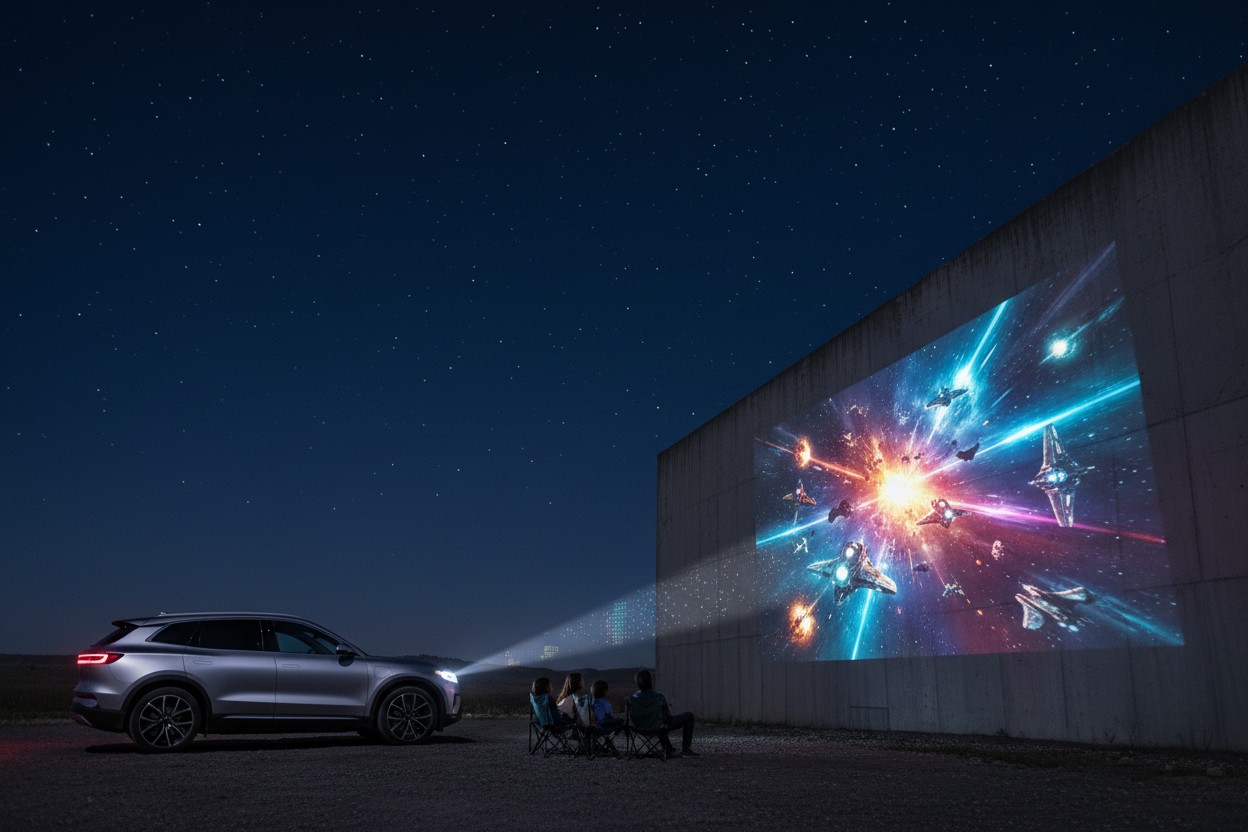
Huawei unveils headlight movie projection for electric vehicles
Huawei introduced an updated version of its XPixel lighting system featuring an “open-air cinema” mode at the Beijing Auto Show last week, according to the company. The headlights contain one million pixels and can project full-color video onto walls or screens in front of a parked vehicle, Xantha Leatham reported for the Daily Mail.
The system allows drivers to beam content from their in-car entertainment system onto external surfaces. The technology represents a shift in automotive competition from traditional performance metrics toward in-vehicle experience features, according to industry observers. Chinese automakers have increasingly focused on software-driven innovation as a differentiator in global markets. [1]
Technology adapts to weather conditions
The system automatically adjusts brightness and contrast in rain or fog, according to Huawei officials cited in the Daily Mail report. This allows viewing in varied conditions without manual intervention from the driver.
The projection draws content from the vehicle’s in-car entertainment system, enabling movies or live sports on an external surface. The headlights also include “light language” assistance that can beam words onto the road such as “please go forward” to communicate with other drivers, the report stated. A separate xSCENE in-vehicle laser projection allows passengers to sit outside behind the car with the boot open and watch content from a screen that pulls out from the interior, according to the company.
First vehicles and availability
The technology will debut in the luxury Aito M9 SUV, a five-door model, according to Huawei. The Aito M9 and other planned vehicles are not yet available in the UK, company representatives stated.
Chinese EV manufacturers continue expanding their global presence while facing varying levels of market acceptance in Western countries. BYD, another Chinese automaker, sold approximately 2.25 million battery electric vehicles in 2025, compared to Tesla’s projected 1.6 million units for 2026, according to a NaturalNews.com report. [2] Xiaomi Auto opened a European research and development center in Munich, Germany, in April 2026 as it prepares for a planned European market entry in 2027, CarNewsChina reported. [3]
Industry reactions and additional features
Tanya Sinclair, chief executive of Electric Vehicles UK, said the feature could “echo the drive-in movie nostalgic feeling,” according to the Daily Mail. Justin Lunny, chief executive of Everrati, told The Times: “When your headlights can project a movie onto a wall, you’ve stopped competing on horsepower and started competing on imagination.”
Other functions of the headlight system include projecting “light language” messages such as “please go first” onto the road, and interactive games like hopscotch for children, the report stated. The underlying technology has been in development for about three years and previously supported lane-change guidance and pedestrian crossing indicators, according to Huawei.
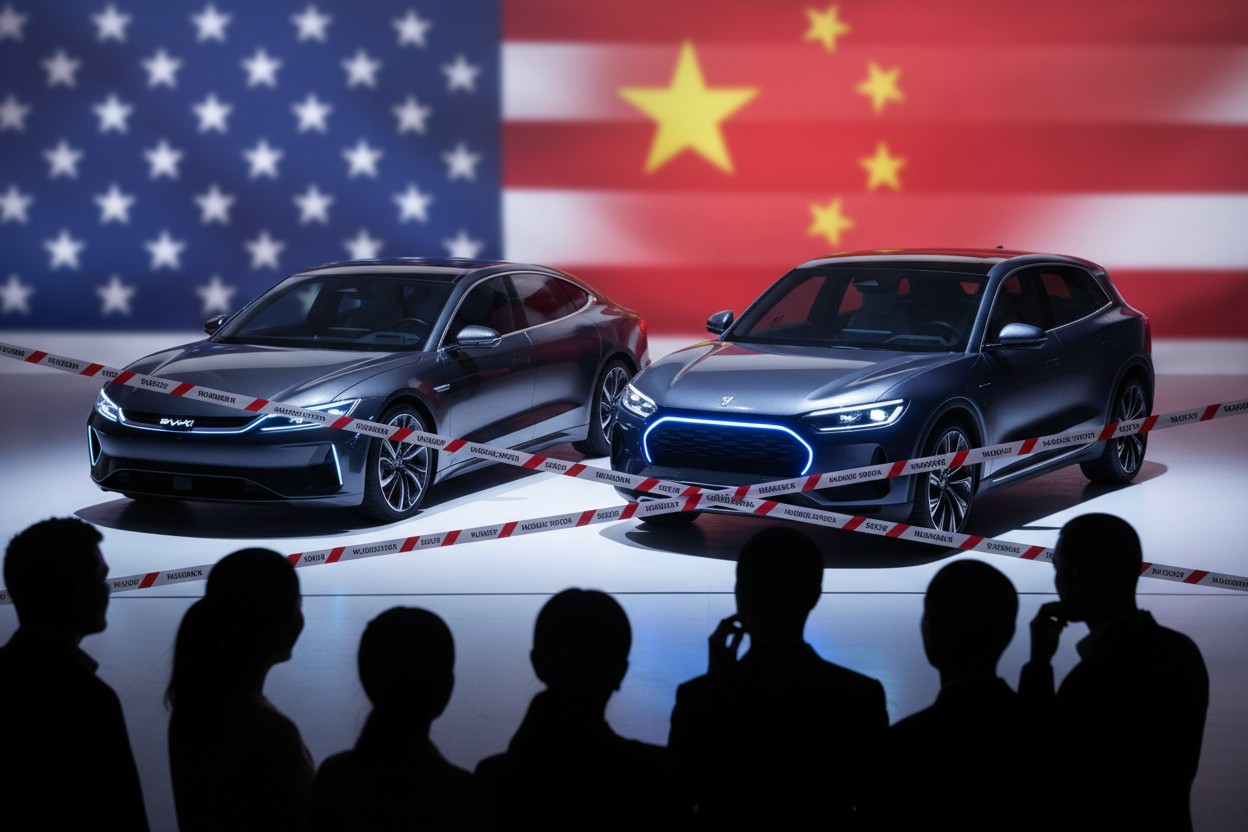
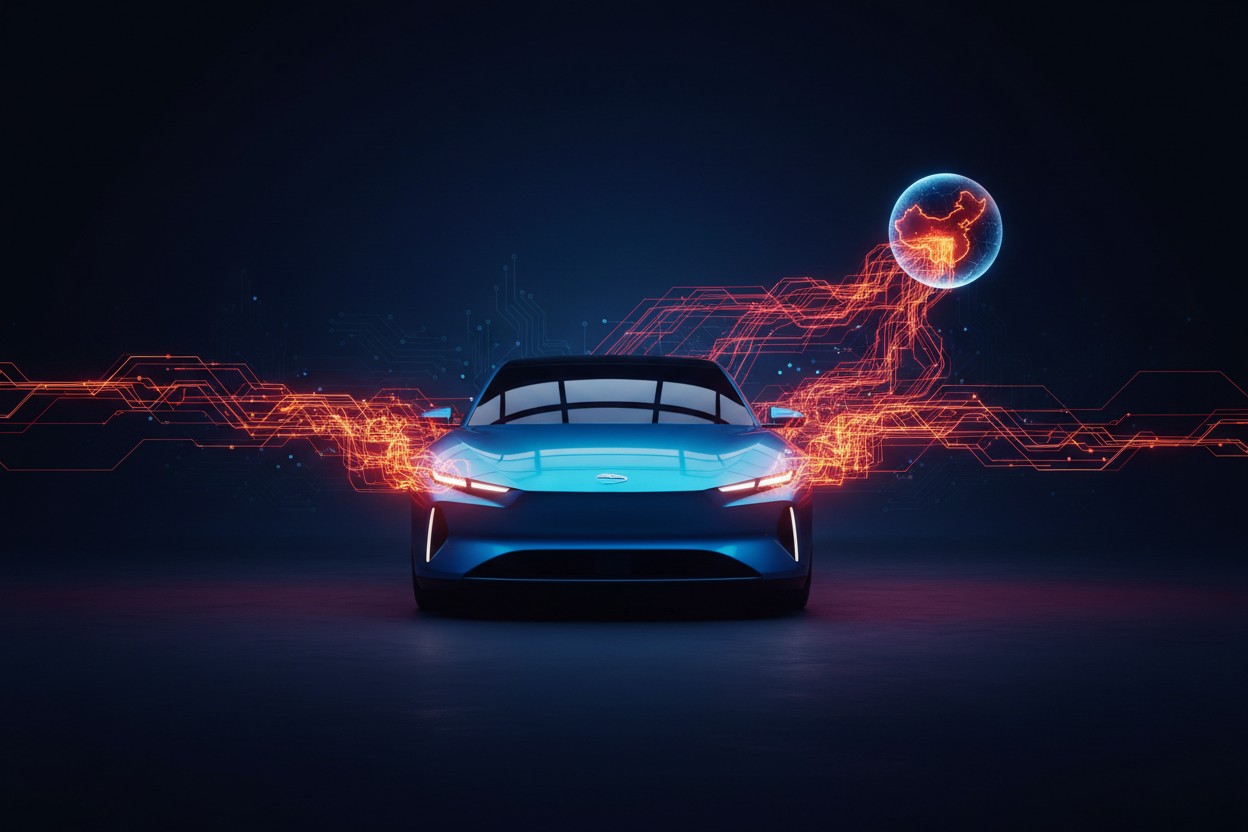
Concerns about Chinese vehicle technology persist in some Western markets. Poland banned Chinese-made vehicles from military sites over fears of espionage and data theft in February 2026. [4] A report by the China Strategic Risks Institute warned that Chinese EVs could be “weaponized” due to built-in wireless components. [5]
Broader context of Beijing Auto Show
Other innovations at the Beijing Auto Show included XPeng’s six-seat electric SUV with AI technology and plans for mass-produced flying cars, CEO He Xiaopeng said, according to the Daily Mail. Chinese battery maker CATL unveiled a version of its “Shenxing” battery that can charge from 10 percent to 98 percent in about six and a half minutes, the company stated.
Chery and Jaguar Land Rover debuted the Freelander 8 new energy SUV at the show, a 5.1-meter off-roader inspired by the original Land Rover Freelander from 1997, CarNewsChina reported. [6] BYD is in talks with Volkswagen to take over part of the German automaker’s Transparent Factory in Dresden, according to a source familiar with the matter cited by CarNewsChina. [7]
Outlook and limitations
No timeline for UK or Western market availability has been announced, and initial models are limited to Chinese domestic manufacturers. The projection technology previously supported lane-change guidance and pedestrian crossing indicators before being adapted for cinema-mode use, according to the Daily Mail.
The broader EV market faces headwinds in Western markets. Major U.S. and European automakers including Ford, General Motors, and Stellantis have experienced significant losses on their EV investments, ZeroHedge reported in February 2026. [8] The competition between Chinese and Western technology sectors reflects broader geopolitical tensions, as Glenn Diesen noted in “Great Power Politics in the Fourth Industrial Revolution.” [9] A bipartisan bill introduced in March 2026 by Senators Tom Cotton and Chuck Schumer seeks to limit U.S. government use of robotics tied to foreign adversaries, especially China. [10]
References
- Mark J Greeven, George Yip, Wei Wei. “Pioneers, Hidden Champions, Changemakers and Underdogs: Lessons from China’s Innovators.”
- “Chinese EV maker BYD pulls ahead as Tesla sales slump.” NaturalNews.com. January 6, 2026.
- “Xiaomi opens European R&D center in Munich, poaching BMW, Porsche, and Lamborghini veterans.” CarNewsChina. April 26, 2026.
- Patrick Lewis. “Poland Bans Chinese Vehicles from Military Sites Over Espionage Fears.” NaturalNews.com. February 21, 2026.
- “Chinese electric vehicles could be weaponized by Beijing, report warns.” NaturalNews.com. October 1, 2024.
- “Freelander 8 SUV from Chery and JLR made live debut in China.” CarNewsChina. April 28, 2026.
- “EXCLUSIVE: BYD in talks to take over part of Volkswagen’s Dresden plant.” CarNewsChina. May 1, 2026.
- “EV Bloodbath: Carmakers Suffer Face-Melting Losses As Buyers Flee, Credits End.” ZeroHedge. February 4, 2026.
- Glenn Diesen. “Great Power Politics in the Fourth Industrial Revolution.”
- Laura Harris. “Bipartisan Bill Targets Chinese-Linked Robotics, Seeks Ban on Federal Use.” NaturalNews.com. March 29, 2026.
Submit a correction >>
Tagged Under:
Big Tech, China, communist China, computing, conspiracy, cybersecurity, cyberwar, dangerous, economy, EVs, flying cars, future tech, glitch, hacking, headlights, information tech, information technology, movies, national security, panic, tech giants, technocrat, threat
This article may contain statements that reflect the opinion of the author
RECENT NEWS & ARTICLES